
Non-communicable diseases (NCDs) are increasingly becoming the leading cause of morbidity and mortality across Africa. Cardiovascular disease, diabetes, cancer, and chronic respiratory conditions are claiming lives at increasing rates and increasingly at productive ages. Yet real-time country-level data on NCDs remains alarmingly scarce.
Africa CDC’s SPARK-NCDs Programme is a bold response to that gap not by building new systems, but by building the workforce capable of making existing ones work in response to NCDs. APHF is partnering in this programme as a fund manager, and we will manage the project and support its implementation. APHF will also lead in the financial management of the grant, ensuring correct fund allocation, efficient use, monitoring timelines, and project reporting obligations.
“We are not creating a new system. We are working with what exists. And we are just getting started.” — Dr. Mohammed Abdulaziz, Africa CDC
The Problem: A Data Desert at the Heart of Africa’s Health Crisis
Ask a Ministry of Health official in many African countries about their country’s cancer or diabetes prevalence, and the answer may surprise you: they don’t know. They refer to global estimation databases, not home-grown, real-time data. But why don’t we have it for NCDs?” That question, posed by Dr. Adelard Kakunze of Africa CDC, goes to the heart of the challenge. The consequences are real. Countries like Rwanda have already made the transition from infectious disease as the leading cause of mortality to NCDs but only because they built the data infrastructure to prove it.
The problem, crucially, is not primarily a systems problem. Countries like Kenya have robust health information infrastructure, mobile reporting, electronic systems and field-ready platforms. The missing link is trained personnel who can embed NCD metrics into those systems, generate reliable data, and translate it into policy-relevant evidence. This is a workforce problem. It is the problem that SPARK is designed to solve.

“Without real-time data on the burden of NCDs in a country or region, it becomes difficult to ask policymakers to put in more funding.” — Dr. Mohammed Abdulaziz, Head of Division of Disease Control and Prevention, Africa CDC
The Solution: SPARK-NCDs
Strengthening Public Health Surveillance and Resilient Knowledge (SPARK) for NCDs is the answer to this challenge. Rather than building an entirely new training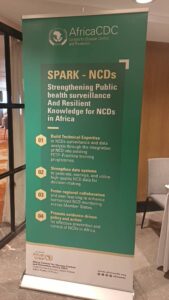 infrastructure, SPARK-NCDs creates an NCD track within the well-established Field Epidemiology Training Programme (FETP) Frontline Platform, which has long equipped African health workers to respond to outbreaks and conduct field epidemiology. Most countries already have FETP. SPARK simply builds on what already exists.
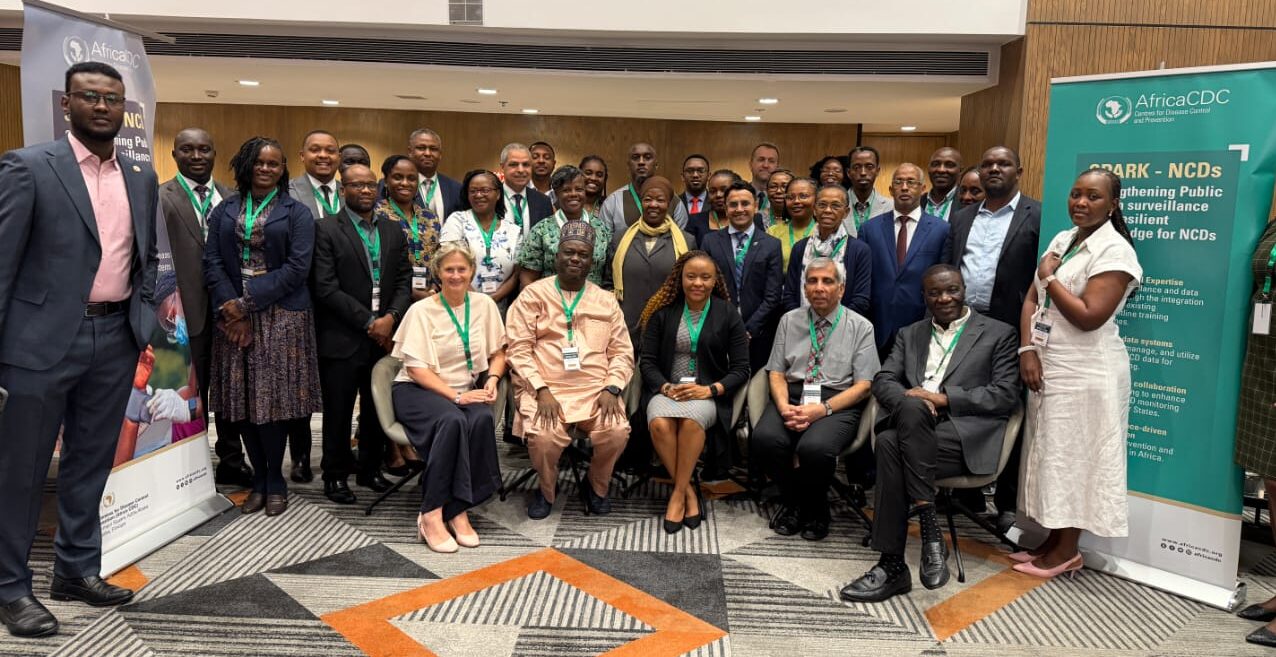
In November 2025, Africa CDC convened a landmark technical workshop in Nairobi, Kenya, bringing together national workforce focal points and NCD leads from 11 African Union Member States, alongside continental experts and strategic partners. The objective was to develop a continentally harmonised, integrated NCD surveillance training curriculum designed for systematic adoption across national training platforms. One of the programme’s most important contributions is a harmonised set of core NCD indicators. NCDs are a vast category, encompassing over 200 conditions, from cardiovascular disease and diabetes to sickle cell anaemia. For health systems with limited capacity, knowing where to start is itself a challenge. Africa CDC’s guidance framework helps countries prioritise, scale, and eventually expand their surveillance activities, while ensuring data comparability across Member States.
“We are not here to create a new system. The same systems collecting data for HIV and malaria can collect data for NCDs. We just need to train the workforce that is already there.” — Dr. Adelard Kakunze, Senior Technical Officer – NCDs, Injuries and Mental Health, Africa CDC
Funding: A $2.65 Million Catalyst
The first phase of SPARK-NCDs is supported by a $2.65 million grant from the Novo Nordisk Foundation (NNF). The strategic logic is clear: once countries begin generating their own NCD data, that evidence becomes a powerful tool for domestic resource mobilisation. Decision-makers respond to evidence. Health ministers and finance ministries that have historically under-prioritised NCDs, often viewing them as diseases of wealthy nations, can be moved by hard local data showing the premature deaths and economic costs occurring within their own borders.
Partnerships: Multi-Sector Collaboration
Among the partners attending the Nairobi workshop was the African Capacity Building Foundation (ACBF), an African Union institution focused on institutional and civil society capacity development. Their involvement reflects the deliberately multi-sectoral approach at the heart of SPARK-NCDs. ACBF’s work in tobacco control, domestic resource mobilisation, and civil society strengthening complements Africa CDC’s health sector focus. Because both institutions fall under the AU umbrella, collaboration is agile.

ACBF’s Mr. Daouda Elhadji Adam highlighted how shared data can shift entrenched perceptions. “People have not realised that NCDs are really damaging our youth and our societies and there is a big cost. But we need evidence to show this.” Reiterated Mr. Daouda.
ACBF’s work to embed tobacco control within the broader NCD agenda and to use health taxation as a dual lever for revenue generation and risk factor reduction is seen as deeply complementary to SPARK-NCDs’s data-generation mission.


Looking Ahead: From Data to Decisions
The SPARK-NCDs Programme is still in its early stages, but the foundations are being carefully laid. A harmonised curriculum, a growing coalition of partners, a clear evidence-generation strategy, and an early success story in Somalia which is developing its first-ever national NCD strategy, with Kenya’s support, all point toward a programme that could significantly change how Africa tracks, manages, and prevents NCDs.
The next step is ensuring that capacity building is matched with systems support, domestic financing, and sustained political will. Training epidemiologists is essential, but those epidemiologists need functional health information systems, government funding, and enabling policy environments to do their work. The programme is moving on all these fronts simultaneously, working not just with health ministries, but with the finance and planning ministries that ultimately control budgets.
Written by Eunice Chege
