
The Africa Centres for Disease Control and Prevention (Africa CDC), as the lead technical implementer of the SPARK-NCD initiative, is working to strengthen Africa’s capacity to prevent, detect and respond to noncommunicable diseases (NCDs). The Africa Public Health Foundation (APHF) serves as the fiduciary and grant management partner, providing the financial, grants and operational management support required to enable and facilitate Africa CDC’s technical implementation of NCD interventions across Member States.As part of this collaboration, a new cohort of public health professionals has graduated from the SPARK-NCD Field Epidemiology Training Programme (FETP) in Nairobi, Kenya. The programme has equipped participants with specialised skills in NCD surveillance, evidence generation, data analysis and translation of evidence into public health action.
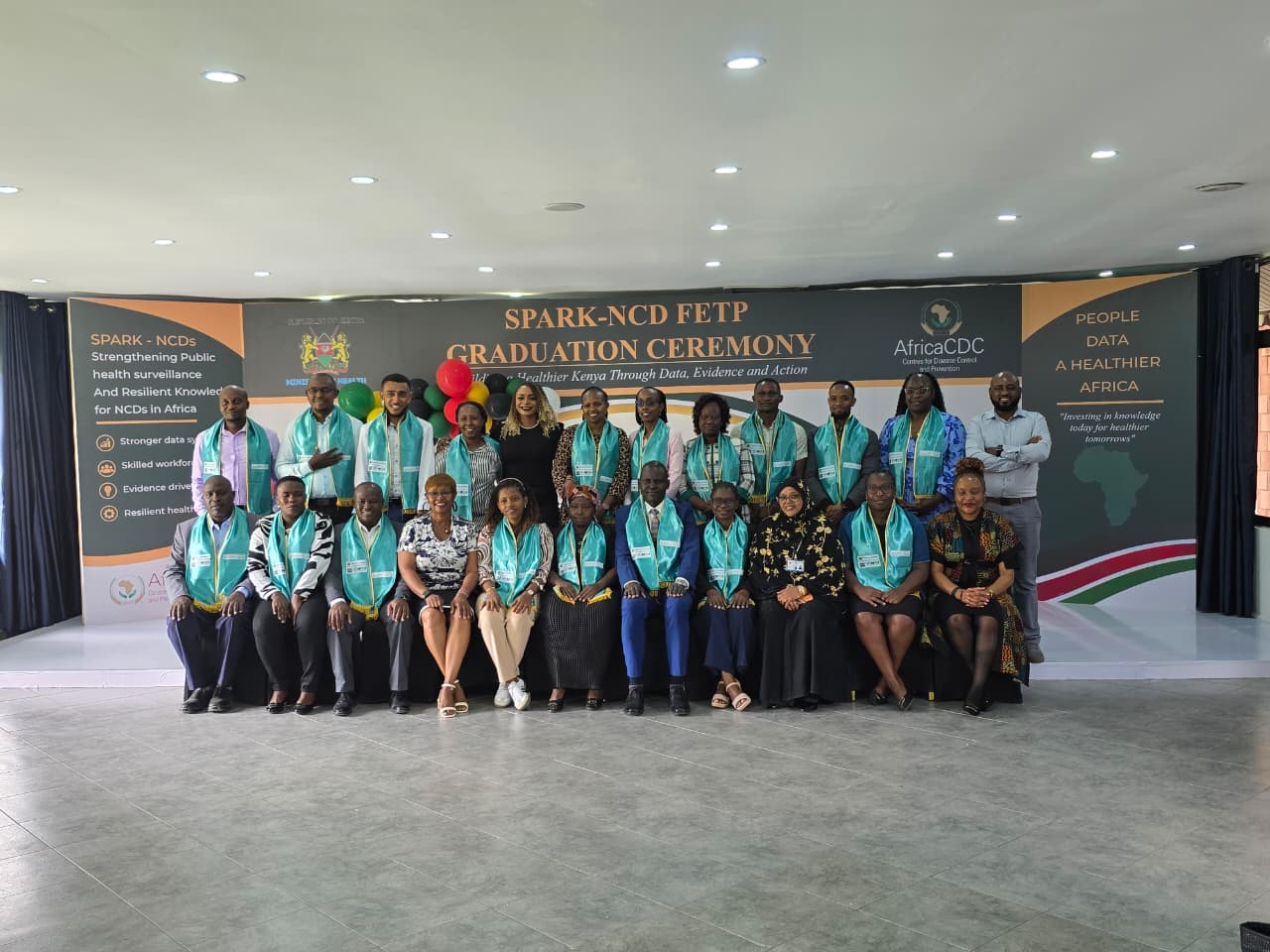 Held under the theme “A Healthier Kenya Through Data, Evidence and Action,” the graduation marks an important milestone in strengthening the public health workforce and building country-level capacity to better understand, monitor and respond to the growing burden of NCDs.
Through this partnership, Africa CDC provides the technical leadership and programme implementation, working with Member States and technical partners to advance NCD prevention, surveillance and response, while APHF provides fiduciary oversight and grant management support, ensuring that resources are effectively managed and made available to support the implementation of Africa CDC’s NCD priorities.


Strengthening the people behind the data
SPARK-NCD focuses on strengthening NCD surveillance and building resilient knowledge systems across Africa. The initiative recognises that effective NCD responses require more than data collection, they require skilled professionals who can analyse data, generate actionable evidence and support decision-making at country level.
Through specialised field epidemiology training, the programme equips public health professionals with practical skills to investigate health trends, strengthen surveillance systems and use evidence to inform public health interventions. The graduates therefore join a growing network of professionals who can contribute to stronger NCD surveillance and evidence-informed public health programmes in their countries.
 From data to evidence, and evidence to action
The collaboration between Africa CDC and APHF reflects a shared commitment to strengthening African-led capacity to address the continent’s public health priorities. By investing in people, knowledge and data systems, SPARK-NCD contributes to stronger and more resilient health systems that are better equipped to identify emerging NCD trends and respond with appropriate interventions. The graduation is therefore more than the completion of a training programme. It represents an investment in the people who will help countries turn data into evidence, evidence into action, and action into better health outcomes. An upcoming workshop in Zambia will provide an opportunity to advance the finalisation of programme manuscripts, consolidate the work undertaken and translate the programme’s experiences into tangible outputs.
